



Must-Hear Edutainer, Top Youth Motivational Speaker for Student Leaders, At-Risk Youth, GEAR UP, TRIO Programs, AVID, JA Career Speaker & MORE
"Our kids don't need another speech! They need what's
REAL, RELATABLE, and REACHABLE!" -Doc Brown, "The Playful Professor" Brings HUMOR, HEART, HEALING, & HOPE‼️

"Motivating and Engaging"
Who is Adolph Brown, III? As a youth, Adolph Brown, III was a curious and hardworking child, inspired by the strong role models in his life: his mother, aunt Lorraine, Uncle Andrew, and his farmer grandparents. Despite the chaos of his father leaving and the family living in abject poverty amid drugs and violence, Adolph excelled in school. Yet, he faced teasing from his peers, and it was only when his grandfather encouraged him that he learned to fight back. Tragedy struck at age 11 when his beloved brother Oscar was murdered, igniting a rage in Adolph that briefly led him to gang involvement. However, the love and support from his family, teachers, and coaches became his guiding light. They helped him navigate through the darkness, and he credits his nurturing home and dedicated educators for his achievements. Adolph became the first person in his family of five to graduate high school and the first-generation college student. Initially pursuing a career in special education to honor his teachers, he later transitioned to graduate studies in education and clinical psychology. Today, he is celebrated around the world as Dr. Adolph “Doc" Brown III, a beacon of hope and resilience and one of the Top Student Leadership Speakers and Top Youth Motivational Speakers in the world. 
Why Dr. Adolph “Doc” Brown, III? Because he’s the real deal—authentic and relatable, like that friend who gets you. From high-risk student to student leader and first-gen college grad, he’s danced through life’s challenges with grace and grit. A proud product of TRIO Programs, he’s more than a youth motivational speaker, Doc Brown is a clinical psychologist and tenured full university professor who has become a world-renowned edutainer and master teacher. Doc Brown is a master storyteller, TV talk show host, and award-winning teacher who knows how to keep an audience on the edge of their seats. Doc Brown understands the struggles youth face today, and he’s not afraid to tackle them head-on with a wink and a smile. He delivers practical takeaways that stick, reminding young people that feeling demotivated is part of the journey—and that’s perfectly okay! With his background as a public school educator, he uses constructive reinforcement like a superhero’s tool belt, helping youth build good habits while sparking their drive for excellence. He teaches self-discipline wrapped in a dose of fun, equipping them with a personal toolkit for life. Plus, he’s not just a speaker; he stays connected through social media, always ready to offer support. Doc Brown isn’t just inspiring; he’s a beacon of hope, showing that every setback can become a setup for a comeback!
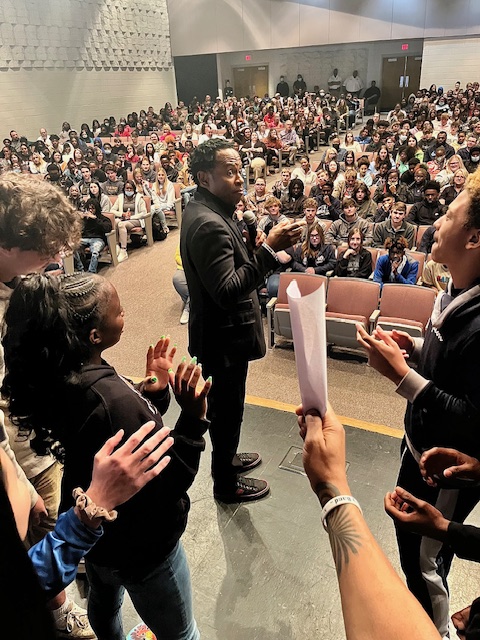
As "The World's Greatest Edutainer," Dr. Adolph "Doc' Brown III is a Former TRIO Program Student who is now a GEAR UP and TRIO Program Speaker, and AVID, Junior Achievement (JA) and Student Leadership Speaker. Doc Brown is the top Youth Motivational Speaker today. Doc Brown is known for CELEBRATING, APPRECIATING, & EDUCATING his audiences! Experience the excitement as students and  the adults who work with them transform before your very eyes as Dr. Adolph "Doc" Brown, III not only encourages academic success, but success in ALL facets of their lives from mental health to youth empowerment.
Doc Brown is not your typical motivational youth speaker. In fact Doc Brown does not believe motivation is enough. This is a reason that Doc Brown is such a strong advocate of the AVID programs as a frequent AVID Keynote Speaker. Doc Brown believes that individual determination is crucial for life life successes, as it fuels perseverance, resilience, and the pursuit of goals despite challenges and setbacks. As a troubled youth and first-generation college student, Doc Brown needed the discipline, impulse control, self-regulation, and good decision-making skills that he now imparts to youth as a world-renowned Clinical Psychologist, Master Teacher, Tenured Full Professor, Parenting Guru & Mental Health Expert on the ABC primetime show The Parent Test, Mental Health Anti-Bullying Advocate, and Best Youth Motivational Speakers for Student Leaders. As a widely known mental health focus group expert and considered the top at-risk youth speaker for student assemblies, Dr. Brown has spoken at over 1000 schools and even more national conferences, and has been interviewed on NBC, CBS, FOX, ABC, BET, and PBS.

Dr. Adolph Brown III's The Most REQUESTED youth topic:"Know the difference between enjoying your youth and destroying your future."
Without a doubt, mental health and youth motivational speaker, clinical psychologist, master teacher, and former at-risk student who became a student leader, Dr. Adolph Brown III offers the most unique, informing, relatable, inspiring, entertaining and fun yet challenging presentations THAT STICK for today's young people as well their teachers and advisors. All generations K-12, TRIO PROGRAMS, GEAR UP, Student Leaders, At-Risk, and college campus students alike have had their fair share of challenges and crises. Today, kids are experiencing scary news on a regular basis coupled with the pressures of social media to "fit in." Everything from shootings, cyber-attacks, school violence to terror attacks have become a harsh reality. Although it may be tough, kids today can be taught to be tougher. Dr. Brown takes young people on a growth-mindset journey to find the light in the midst of so much darkness. Kids will learn that all is not perfect in the world but that they can make it better.


Dr. Adolph Brown became the best at-risk and student leadership youth motivational speaker by overcoming "insurmountable" obstacles himself on his journey from an at-risk student of abject poverty to a doctor of clinical psychology and a married Christian father of eight uniquely wonderful children. As a former at risk youth in the urban inner-city who spent his summers in rural Virginia on his grandparent's farm, Dr. Brown knows firsthand about the struggles of today's young. He receives countless accolades and positive acknowledgements from his tremendous impact on student audiences and their entire school community from k-12/k-14 to higher education community college & university students. As a clinical and educational psychologist, former special education and alternative education teacher, he successfully addresses issues related to student leadership, anti bullying, college & career readiness, empathy, adolescent & teen mental health, Black History Month, at risk students, character, standardized test anxiety, peer pressure, drug awareness, student leadership, digital citizenship, fighting, healthy choices, dating, entrepreneurship, the importance of education, sportsmanship, and the SUCCESS Mindset. Dr. Brown has also enjoyed his long-standing relationship as a TRIO Program Speaker and keynote for FCCLA, FBLA, and HOSA. Doc Brown has also shared his expertise, life experiences, and his essential skills book "Championship Habits" with students of Junior Achievement (JA).
The Student Success Assemblies Tour Dream Team
Character, Choices & Consequences
_0.jpg)
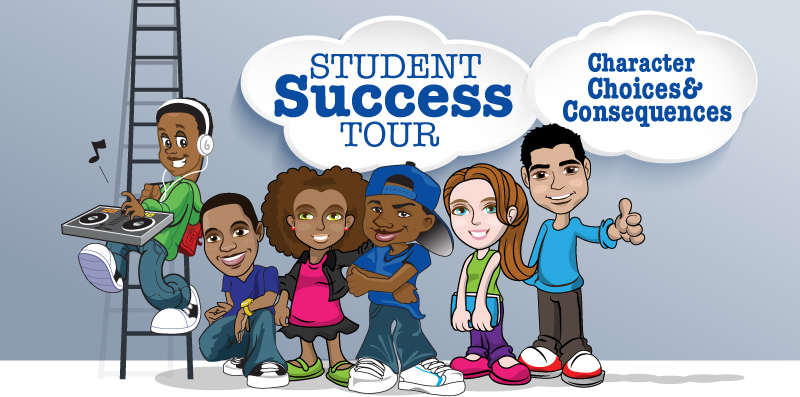
The Dream Team is comprised of today's best and most diverse interracial and multi-ethnic group of youth motivational teacher speakers and student leadership speakers. THERE IS SOMETHING FOR EVERY ONE! They began as group of friends who made the choice not to give up; now they are a family of encouraging individuals. They are collectively known as the Dream Team because they never allowed anything to stand between them and their dreams. Individually, team members have experienced the challenges associated with bullying, family problems, language barriers, English as a Second Language, being black & brown boys, alienation, the effects of family alcohol and drug abuse, fighting, racism and self-esteem. Through their stories of trials and triumphs of overcoming being a “Newcomer to Overcomer,” "The Leadership Promise," "Be A Buddy, Not A Bully," "At-Risk to At-Promise, "Be Better, Not Bitter," “Hugs Not Drugs,” “BE-YOU-TIFUL” and “It's Not How You Start..” the Dream Team connects with all through powerful messages, uplifting music and lots of motivation. Are you concerned about students missing valuable class time? Please consider bringing SUPER SATURDAYS & Professional School Based Mentoring to your school. CLICK TO LEARN MORE!
https://bizedauthority.com/programs/super-saturdays/ To date, as a school speaker and Title I trainer Dr. Brown has positively impacted as many as 26,000 students at once to intimate focus groups of 12 students. His most memorable positive impact as a top student leadership facilitator, at-risk youth speaker, and mental health school speaker has been students denouncing their gang affiliations and giving Dr. Brown their gang paraphernalia. Once in a Virginia school, a student gave Dr. Brown a loaded handgun after the presentation. Dr. Brown follows up with this former student to this very day.
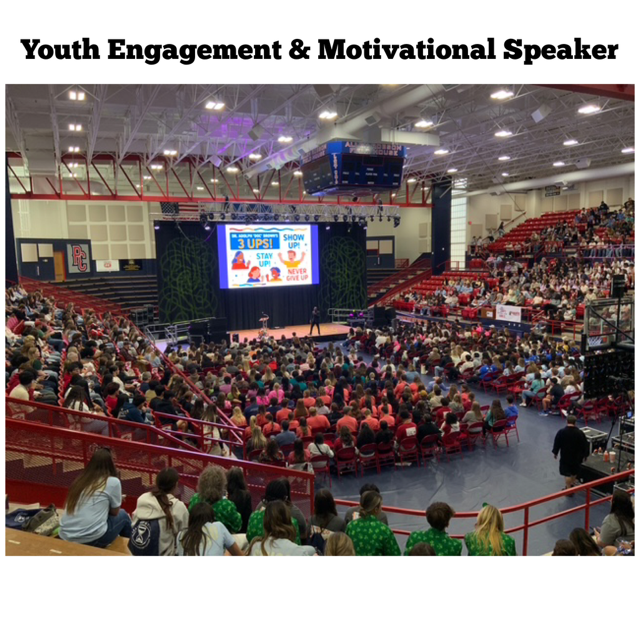
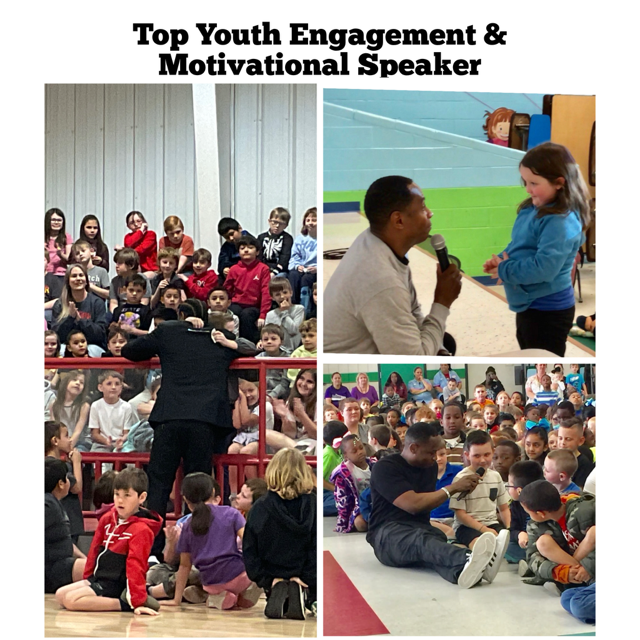
INTERNATIONAL ENGAGEMENTS WELCOMED!

 "Championship Habits" is Dr. Adolph "Doc" Brown III's Best-Selling Student Leadership Book used in Schools, Colleges, and Workplaces around the world.
Engaging Student Keynotes, Student Assemblies, Student Focus Groups, Student Workshops, & Student Retreats
(Qualifies under Title I, Part A Parent , Teacher, & Student Engagement in Closing The Achievement - Agenda, Proposed Academic Outcomes, SMART Goals & Strategies specific to your school will be provided)
Just One Visit from Doc Brown & You’ll Want Him Back Again & Again!
🎯A Note For Administrators: It’s recommended that you get input from your teachers and staff regarding essential topics to have Doc Brown discuss with your young people.
-
Commitment to Graduate! Portrait of a Graduate. Your Most Important "Selfie!"
-
Mind Matters - A Youth Toolkit for Mental Health Awareness
-
GEAR UP for The Power of Possibility
-
Students As Leaders. A Motivational Makeover!
-
Put Down What You Are Carrying! Unpacking Your Emotional Baggage.
-
If It Is To Be, It’s Up To Me!
-
ALL In, We’re Gonna Win! ™
-
"Cousins. A LIVE & TRUE Story of Parallel Lives: The Journey of First Cousins Bound by Blood but Diverged by Choice."
-
Attitude Changes Everything!
-
Virtual Group Hug! Connecting Our Hearts In Trying Times.
-
Silence is Violence!
-
"Know the Difference Between Enjoying Your Youth & Destroying Your Future." Character, Choices & Consequences Student Success Assemblies Tour
-
“It Depends on Me!” - Master Class #247 No Excuses
-
De-STRESS the Test. Standardized Testing Success!
-
Starting Early™ Challenging Racial Bias before It Becomes a Habit
-
Why Fit In When You Were Born To Stand Out? Saying Goodbye To Negative Peer Pressure!
-
Invest In Your Success! Commitment To Graduate
-
It’s A Tough Time To Be A Kid, But You Are A Tough Kid!™
-
It's Not How You Start...IT'S HOW YOU FINISH!™
-
YOU GOT THIS! Moving Mountains - The Growth Mindset
-
The One Love Anti Bullying Philosophy™
-
A Drug-Free Me! How Will You Handle Your Storm?
-
Don't Judge A Book By Its Cover! Creating Safe Spaces & Promoting Psychological Safety for ALL!